
How to Keep Rats Out of Your Home: 5 Proven Prevention Steps
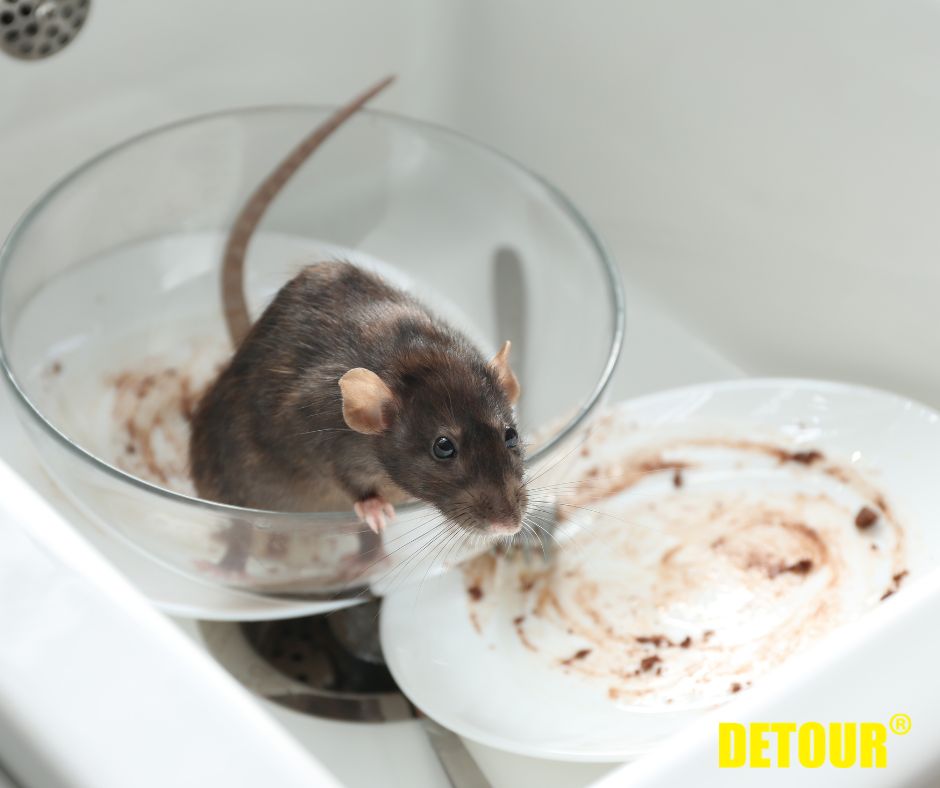
Few home discoveries trigger immediate panic like seeing a rat dart across the floor or hearing scratching noises inside your walls. Beyond the discomfort, rats carry diseases, contaminate food, and inflict severe structural damage by chewing through wood, insulation, and electrical wiring.
While many homeowners instinctively reach for snap traps or toxic rodenticides, these reactionary measures only tackle the symptoms—not the root cause. Real, long-term rodent protection requires proactive exclusion: blocking entryways and creating an uninviting environment.
Below is a complete five-step guide on how to keep rats out of your home using smart exclusion techniques and eco-friendly repellent technology.
Quick Summary: How to Prevent Rat Infestations
- Seal Entry Points: Block all cracks and gaps larger than 0.5 inches around foundations, pipes, and vents.
- Eliminate Attractants: Store food in airtight containers, secure outdoor trash, and remove standing water.
- Apply Contact Repellents: Apply professional-grade repellents like DETOUR® Rat-Repellent Gel along travel routes.
- Protect Vulnerable Wiring: Coat exposed wires with aerosol repellents to prevent chewing damage.
- Maintain & Monitor: Inspect your perimeter seasonally and track activity with monitoring tools.
Step 1: Inspect and Identify Entry Points
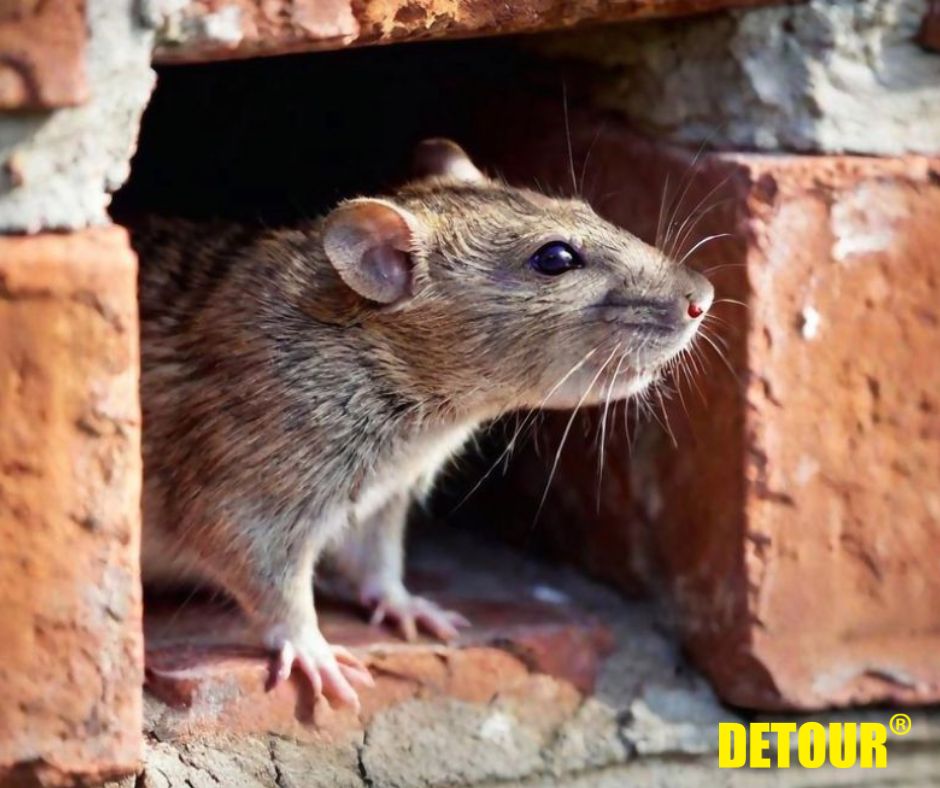
Rats possess collapsible skeletons, allowing a full-grown rat to squeeze through an opening as small as a quarter. To keep them out, you must conduct a thorough perimeter inspection.
Walk around your home’s exterior and check:
- Utility pipe and wire penetrations
- Foundation cracks and gaps in siding
- Unscreened attic or crawlspace vents
- Damaged garage door seals and weatherstripping
Common Signs of Rat Activity
Before sealing gaps, identify active pathways. Look for dark, greasy rub marks along baseboards, rat droppings near food sources, and fresh gnaw marks on wood or plastic.
Step 2: Remove Food, Water, and Shelter Attractants
Rats enter homes seeking survival resources. Removing these attractants reduces the urge for rodents to invade.
- Secure Food Supplies: Keep pantry items, pet food, and birdseed in heavy-duty, airtight glass or metal containers.
- Remove Water Sources: Fix leaky outdoor spigots, empty birdbaths, and ensure air conditioner drain lines flow away from your foundation.
- Declutter the Yard: Trim tree branches back at least 6 feet from rooflines, stack firewood off the ground, and clear dense brush piles.
Step 3: Seal Gaps with Physical Barriers and Rat-Repellents
Simply stuffing steel wool into a hole isn’t always enough—determined rats can push through or gnaw surrounding material. The most effective exclusion strategy pairs physical barriers with active repellents.
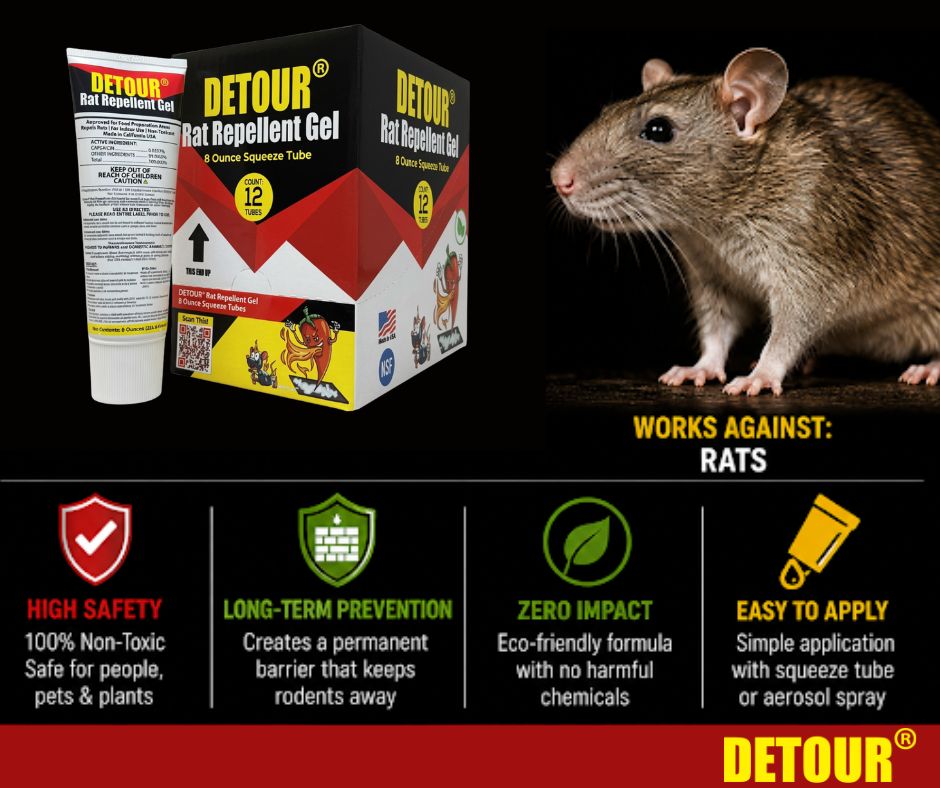
For maximum protection, apply DETOUR® Rat -Repellent Gel directly to cracks, gaps, pipe penetrations, and rodent travel paths to create an effective barrier against unwanted pests. For larger openings and foundation gaps, use the DETOUR® Caulking Tube to seal entry points around your home’s perimeter, providing long-lasting protection where rodents commonly gain access.
Why DETOUR® Rat-Repellent Gel Works
Formulated with pharmaceutical-grade capsaicin (the natural compound in chili peppers) suspended in all food-grade materials food-grade, DETOUR® delivers immediate sensory irritation upon direct physical contact. When rats touch the gel, it clings to their paws and fur. As they groom themselves, the capsaicin triggers a powerful, non-lethal aversion that forces them to abandon the area.
Because DETOUR® is 100% non-toxic, EPA-registered, and NSF-certified, it provides a safe, green alternative to hazardous poisons—making it ideal for homes with children and pets. Furthermore, its all-weather formula will not freeze or melt, offering 3-6 months of outdoor defense and 6-12 months indoors.
Step 4: Protect High-Risk Zones (Pipes, Wires, and Rooflines)
Roof rats excel at climbing and enter through attic vents, while Norway rats target lower levels. Protecting structural vulnerabilities requires targeted applications.
For tight spaces and electrical wiring, use DETOUR® Wire Protection Gel. Spraying exposed wires in engine bays or utility voids prevents costly gnawing damage without harming sensitive electronics.
Step 5: Monitor and Maintain Your Perimeter
Exclusion is an ongoing process. Perform seasonal inspections every spring and autumn to verify that sealants remain intact and no new gaps have developed.
You can also deploy monitoring tools like the DETOUR® RatTrax® Tracking Tunnel to track rodent movement, verify active routes, and confirm that your home remains rat-free.
Protect Your Home with DETOUR® Today
Keeping rats out of your home doesn’t require dangerous chemicals or inhumane lethal traps. By combining thorough exclusion habits with the proven power of DETOUR® repellents, you can build a clean, eco-friendly barrier that keeps pests away for good.

Frequently Asked Questions About Rat Repellents, Door Protection & DETOUR® Gel
What smells or substances deter rats best?
Rats have an acute sense of smell and sensory awareness. Natural irritants like capsaicin (chili pepper extract) are exceptionally effective because they trigger direct sensory aversion upon contact, forcing rats and mice to abandon the route completely.
Can rats squeeze under doors?
Yes. Rats can squeeze under any door gap greater than half an inch (13 mm). Installing rigid door sweeps and applying DETOUR® Gel along threshold edges blocks these entry points.
Is DETOUR® Gel safe to use around pets and children?
Yes. DETOUR® Gel is made with 100% food-grade mineral oil and pharmaceutical-grade capsaicin. It contains zero synthetic poisons or toxicants. While contact with skin or eyes causes temporary mild irritation (similar to handling hot peppers), it poses no toxicological threat to non-target animals or humans when applied as directed.
How long does DETOUR® Gel last after application?
When applied on non-porous surfaces, DETOUR® Gel remains fully effective for up to 3-6 months outdoors and up to 1 year indoors without melting or freezing.
What smells or substances deter rats best?
Rats have an acute sense of smell and sensory awareness. Natural irritants like capsaicin (chili pepper extract) are exceptionally effective because they trigger direct sensory aversion upon contact, forcing rats and mice to abandon the route completely.
Can rats squeeze under doors?
Yes. Rats can squeeze under any door gap greater than half an inch (13 mm). Installing rigid door sweeps and applying DETOUR® Gel along threshold edges blocks these entry points.
Is DETOUR® Gel safe to use around pets and children?
Yes. DETOUR® Gel is made with 100% food-grade mineral oil and pharmaceutical-grade capsaicin. It contains zero synthetic poisons or toxicants. While contact with skin or eyes causes temporary mild irritation (similar to handling hot peppers), it poses no toxicological threat to non-target animals or humans when applied as directed.
How long does DETOUR® Gel last after application?
When applied on non-porous surfaces, DETOUR® Gel remains fully effective for up to 3-6 months outdoors and up to 1 year indoors without melting or freezing.