
How Do Capsaicin-Based Rat and Mouse Repellents Work?
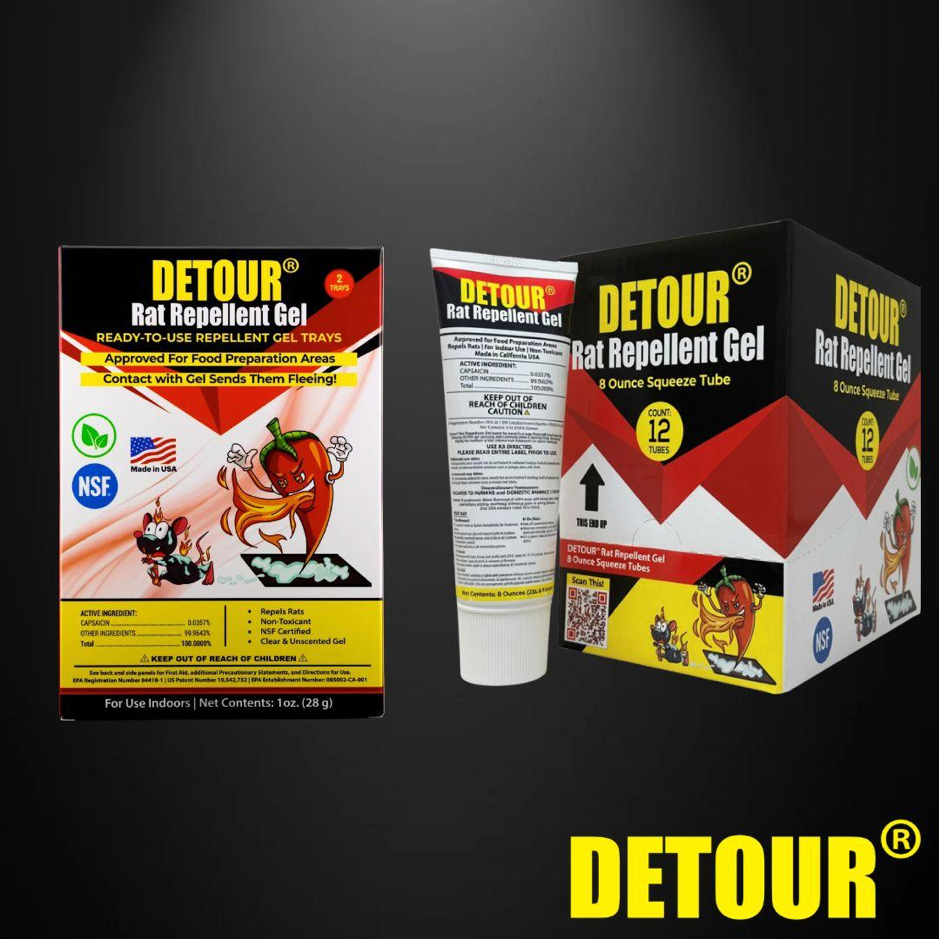
Capsaicin-based rat and mouse repellents work on contact. When a rodent touches the treated surface, capsaicin triggers an intense but temporary burning sensation, so the animal leaves and learns to avoid that spot. They are not room-wide scent barriers, which is why placement along active runways decides how well they perform.
What Is Capsaicin?
Capsaicin is the compound that makes chili peppers hot, and the National Pesticide Information Center notes it is also used as an animal repellent.
In DETOUR® Rat Repellent Gel products, it is the active ingredient: pharmaceutical-grade capsaicin suspended in a non-drying gel that won’t freeze or melt. The products contain no poisons or rodenticides. They repel rodents; they don’t kill them.
How Does a Capsaicin-Based Contact Deterrent Work?
A capsaicin contact deterrent works only when a rodent touches it. The gel clings to paws, fur, and muzzle, and capsaicin activates the heat and the TRPV1 pain receptors that mammals use to sense burning heat. The rodent feels an intense, temporary burn that last 4-6 hours without any lasting harm. The rat or mouse flees the area thinking there is an intense heat source nearby and learns to avoid the area.
Unlike odor-based repellents, DETOUR® Rat Repellent Gel doesn’t rely on smell or sound, so DETOUR® in the middle of a room protects nothing. It protects the surface it covers: the runway, pipe, gap, or wire a rodent has to cross.
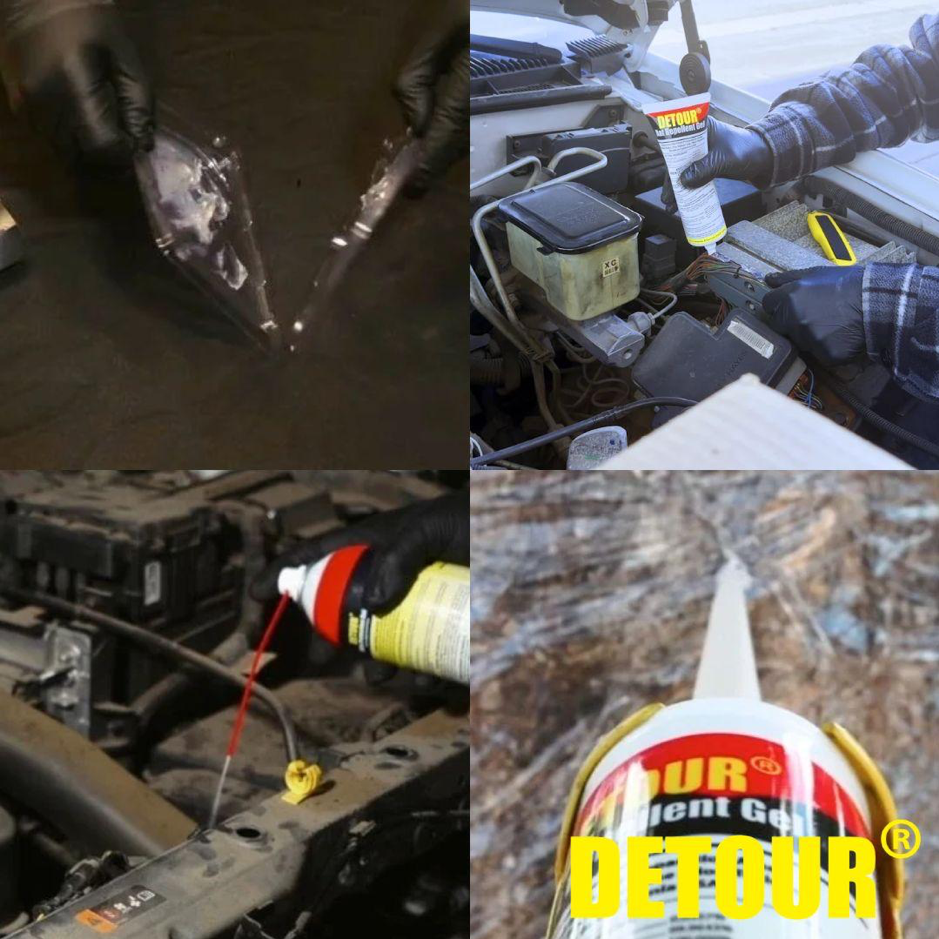
How Does Product Format Affect Application?
Each format puts the same capsaicin gel where a different job needs it, per DETOUR’s application sheets:
DETOUR® Rat Repellent Gel 8 oz. Squeeze Tube | Spot treatments: baseboards, cabinet corners, plumbing penetrations | ½-inch zig-zag bead; no caulking gun needed. On a vertical surface apply into a ¼ inch think layer. |
DETOUR® Rat Repellent Gel 10 oz. Caulking Tube | Long runs: foundations, loading docks, roll-up doors, food-prep facilities | ½-inch zig-zag bead; dispensed from a standard caulking gun. On a vertical surface apply into a ¼ inch think layer. |
DETOUR® Rat Repellent Gel Tray | Pantries, under sinks, drop ceilings, where loose gel isn’t practical | Gel-side up on a flat surface; add non-poisonous bait; check daily |
Engine bays, wiring harnesses, generators | Spray from 4–6 inches, engine off and cool; cover the entire wire |
Apply to clean, dry, non-porous surfaces where possible. In food facilities, treat the structure and perimeter only, never food-contact surfaces. Always follow the current label.
Field example: At Santa Anita Race Track, rodenticide programs posed unacceptable risks to horses. DETOUR® reports its gel was used instead in stable underpinnings, feed storage, conduit runs, and service tunnels.
Why Do Placement and Inspection Matter?
Placement matters because the gel only works where rodents touch it. DETOUR®s directions call for applying it where activity has been identified, so inspect first.
Look for droppings, rub marks, gnawing, and urine trails. Then treat every active pathway and entry point, not just one or two. Gaps in a bead let rodents pass, so wrap pipes fully and edge each hole inside and out.
Field example: In DETOUR®’s Planet Hollywood Las Vegas case study, technicians pulled booths to expose hidden runways. Gel went behind equipment, along wall/floor lines, into electrical and plumbing penetrations, and wherever droppings, urine trails, or rat oil marks appeared.
When the route isn’t clear, a RatTrax® Tracking Tunnel maps it first with UV powder and a blacklight.
What Are the Limitations of Repellents?
A repellent changes where rodents go; it doesn’t change why they are there.
- It doesn’t repair entry points. Gaps still need exclusion.
- It doesn’t remove food, water, or shelter. Sanitation still matters.
- Coverage wears down. Dust, weather, and traffic call for reinspection and reapplication.
- Rodents may redirect to untreated routes.
How Can Professionals Evaluate Results?
Evaluate results by comparing activity at the same locations before and after treatment.
- Document placement: mark every bead, tray, and treated wire on a floor plan, with photos and dates.
- Recheck those spots for fresh droppings, gnawing, or disturbed gel.
- Watch for redirected activity at untreated points.
- Track before and after with a RatTrax® tunnel on the same runway.
That record is what proves results to a client. In the Planet Hollywood case study, DETOUR® reports zero rat sightings two-plus months after application across seven kitchen venues, and more than six hours of technician time saved per week.
Final Thoughts: Getting Results From Capsaicin-Based Rat and Mouse Repellents
These repellents work when rodents touch them, so results depend on evidence-based placement, the right format, and documented follow-up.
Ready to choose a format? Review the DETOUR® product line and read each product’s application directions and label before your next treatment.

FAQs About Capsaicin Rat and Mouse Repellents
Is capsaicin a contact or scent deterrent?
Contact. Rodents must touch the treated surface to feel the burn; it doesn’t create a scent barrier across a room.
Which DETOUR® format should I use?
Squeeze Tube for spot treatments, Caulking Tube for long runs, Gel Trays where loose gel isn’t practical, and Wire Protection Gel for wiring.
Where should capsaicin gel be placed?
Along active runways and at entry and exit points where inspection shows activity, covering every active path.
Can capsaicin repellents replace exclusion?
Seal entry points first, then bead around each sealed entry and onto wire mesh or copper wool as an added layer for the most effective protection.
How often should treated areas be checked?
Check Gel Trays daily and gel lines on every follow-up visit. Reapply where gel is worn, dusty, or depleted, as the label directs.