
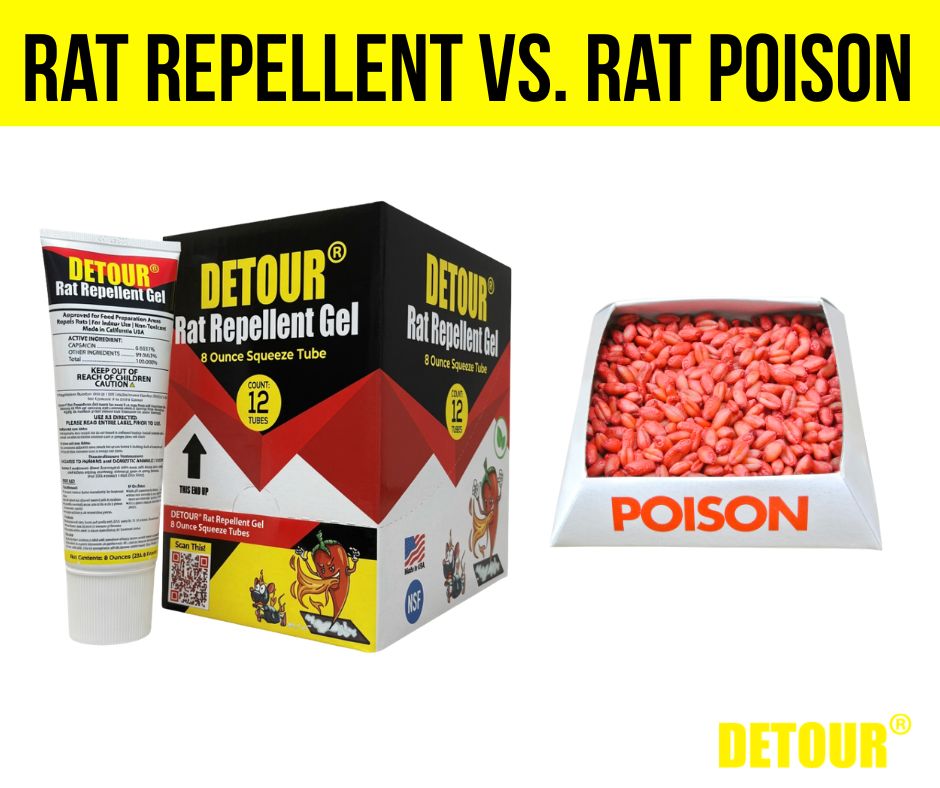
Rat Repellent vs. Rat Poison: Which Works Better for Your Home?
The DETOUR® Wire Protection gel offers spray coverage for broad wire surfaces and hard-to-reach voids.
The aerosol format lays down an even protective layer across engine bays, equipment housings, machinery wiring, and industrial equipment wiring with ease. Allowing fast and effective coverage over large and irregular surfaces.
Hold the can a few inches away from the surface and coat target area evenly for optimal wire protection results.
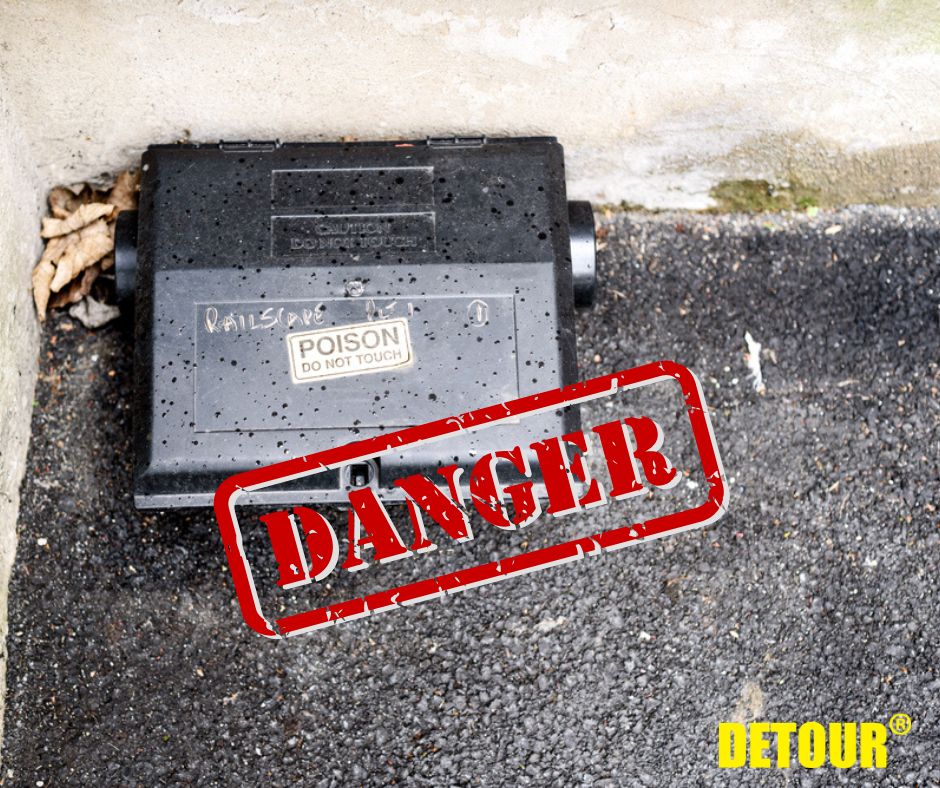
The Hidden Dangers of Traditional Rat Poison
Rat poison (rodenticide) seems simple because it promises to kill invading pests. Yet, the collateral damage of chemical poisons far outweighs short-term benefits.
1. Severe Risks to Pets and Children
Rodenticide baits use attractive odors to entice rats. Unfortunately, those same scents attract dogs, cats, and young children. Accidental ingestion of anticoagulant poisons can cause severe internal bleeding and fatal toxicity. Rodenticides remain one of the most common pet toxins reported to the ASPCA Animal Poison Control Center each year, and accidental exposure requires immediate veterinary attention
2. Secondary Poisoning of Wildlife
Poisoned rats do not die immediately. They wander outdoors in a weakened state, becoming easy prey for owls, hawks, and neighborhood pets. This secondary poisoning devastates ecosystems by killing natural predators that keep rodent populations balanced.
3. Dead Rodents Inside Walls
Poisons do not force rats outside before dying. Instead, poisoned rodents retreat into wall cavities, attics, or under floorboards. This leads to unbearable decomposition odors, insect infestations, and costly drywall repairs.
4. Rodent Resistance
Rats are highly adaptable. In some regions, repeated use of anticoagulant rodenticides has contributed to genetic resistance, allowing certain rat populations to survive treatments that were once effective. Even where resistance is not present, rats can develop behavioral avoidance, learning to avoid bait stations or becoming wary of unfamiliar food sources after negative experiences. As a result, rodenticides may become less effective over time while continuing to pose poisoning risks to pets, wildlife, and non-target animals.
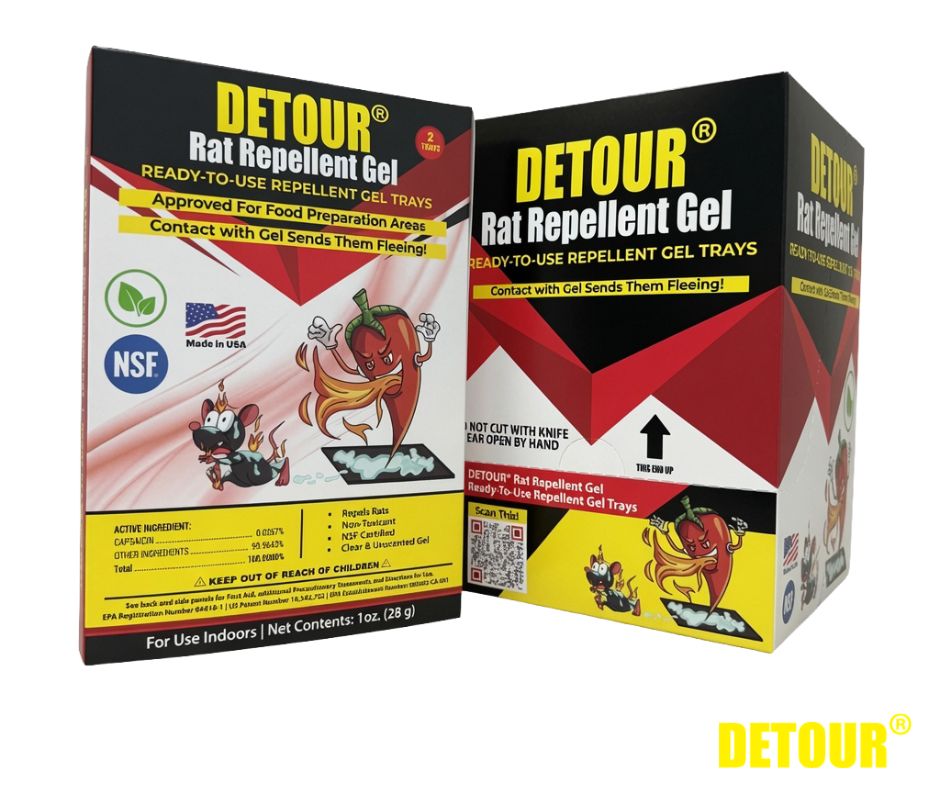
How Repellents Offer a Smarter Alternative
Rather than inviting rodents inside with toxic bait, modern bio-repellents focus on structural defense and prevention. Instead of killing rats after they invade, bio-repellents create barriers that keep pests away entirely.
Repellents address the problem at the entry point. When rodents cannot enter your structure or navigate runways, they move elsewhere, keeping your living spaces hygienic and damage-free.
Why DETOUR® Repellent Gel Delivers Superior Results
When evaluating repellents, formula quality matters. Fragrance sprays and ultrasonic devices often fail because rats adjust to scents or sounds. DETOUR® Repellent Gel works differently through active sensory contact.
Formulated with pharmaceutical-grade organic capsaicin (chili pepper extract) in a food-grade mineral oil base, DETOUR® is a professional-grade, EPA-registered, and NSF-certified contact repellent.
When a rat touches DETOUR® Rat Repellent Gel, capsaicin triggers a powerful burning sensation on its paws and nose. This causes an immediate aversion response and establishes a learned behavioral barrier. The rodent flees and avoids treated areas permanently.
Versatile Protection for Every Application
DETOUR® provides target-specific solutions for DIY homeowners and pest professionals:
- DETOUR® Squeeze Tube (8 oz): Precision application for pipe penetrations, gaps, and tight entry cracks.
- DETOUR® Caulking Tube (10 oz): Heavy-duty protection for caulking guns along foundation perimeters.
- DETOUR® Wire Protection Gel Aerosol can (11 oz.): Engineered to protect vehicle engines, wiring, and utility lines from rodent damage.
- DETOUR® Gel Trays: Pre-loaded trays ideal for attic joists, subfloors, and drop-in placement.
No matter where rodents are trying to enter or cause damage, DETOUR® offers a long-lasting, non-toxic solution designed for the job. From sealing foundation gaps and pipe penetrations to protecting vehicle wiring and hard-to-reach spaces, every product is engineered to help stop rodents before they become a costly problem. Choose the DETOUR® application that best fits your needs and create a safer, rodent-resistant home or property.
Make the Smart Switch Today
Comparing rat repellent vs. rat poison reveals a clear winner. Poison creates severe toxicity risks for pets and children, harms wildlife, and leaves rotting carcasses behind walls. Bio-repellents provide a safer, cleaner, and far more effective long-term solution.
Protect your home without toxic chemicals. Explore our full line of non-toxic rodent control solutions on the official DETOUR® homepage, or visit our DETOUR® FAQ guide to see how bio-repellent gel secures your property.

Frequently Asked Questions About Rat Repellent vs. Rat Poison
1. Is rat repellent better than rat poison?
For many homeowners, yes. A high-quality rat repellent helps prevent rodents from entering your home, while rat poison only works after rats have already invaded. Non-toxic repellents like DETOUR® Gel also eliminate the risk of dead rodents inside walls, secondary wildlife poisoning, and accidental exposure to pets and children.
2. Does rat poison attract rats into your home?
Yes. Most rat poisons are formulated as bait, using attractive food scents and flavors to lure rodents. This means you’re encouraging rats to enter your property before attempting to eliminate them. Repellents work differently by discouraging rodents from entering in the first place.
3. Is DETOUR® Gel safe to use around pets and children?
Yes. DETOUR® Gel is made with food-grade mineral oil and pharmaceutical-grade organic capsaicin. It contains no toxic poisons or rodenticides. While contact may cause temporary irritation similar to handling hot peppers, it poses no toxicological risk when used as directed.
4. Where should I apply rat repellent for the best results?
Apply DETOUR® Gel around common rodent entry points, including foundation gaps, utility penetrations, garage doors, crawl spaces, attic openings, vents, pipes, and other areas where rats are likely to enter or travel. Creating a protective barrier at these locations helps stop rodents before they get inside your home.
1. Is rat repellent better than rat poison?
For many homeowners, yes. A high-quality rat repellent helps prevent rodents from entering your home, while rat poison only works after rats have already invaded. Non-toxic repellents like DETOUR® Gel also eliminate the risk of dead rodents inside walls, secondary wildlife poisoning, and accidental exposure to pets and children.
2. Does rat poison attract rats into your home?
Yes. Most rat poisons are formulated as bait, using attractive food scents and flavors to lure rodents. This means you’re encouraging rats to enter your property before attempting to eliminate them. Repellents work differently by discouraging rodents from entering in the first place.
3. Is DETOUR® Gel safe to use around pets and children?
Yes. DETOUR® Gel is made with food-grade mineral oil and pharmaceutical-grade organic capsaicin. It contains no toxic poisons or rodenticides. While contact may cause temporary irritation similar to handling hot peppers, it poses no toxicological risk when used as directed.
4. Where should I apply rat repellent for the best results?
Apply DETOUR® Gel around common rodent entry points, including foundation gaps, utility penetrations, garage doors, crawl spaces, attic openings, vents, pipes, and other areas where rats are likely to enter or travel. Creating a protective barrier at these locations helps stop rodents before they get inside your home.