
How to Stop Rats From Chewing Car Wires: A Complete Automotive Protection Guide
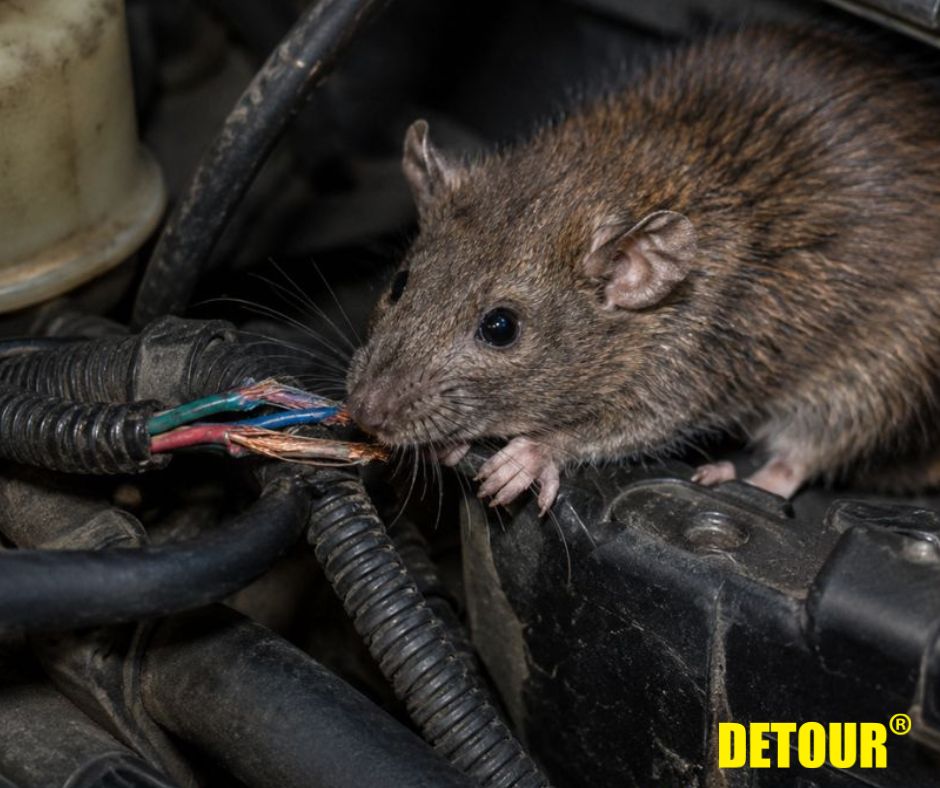
Few issues are as frustrating for a vehicle owner as turning your ignition key only to hear a rapid clicking sound or seeing a dashboard light up like a holiday tree. Every year, thousands of drivers face astronomical repair bills ranging from several hundred to thousands of dollars due to unexpected rodent infestation under the hood. Rats, mice, and squirrels actively seek out dark, warm engine compartments to build nests and chew vital wiring. Worse yet, modern auto manufacturers routinely utilize soy-based wiring insulation, turning your vehicle into an all-you-can-eat buffet for hungry rodents.
If you are dealing with chewed harness wiring, severed sensor lines, or recurring engine bay visitors, standard traps and home remedies will not work. You need a dedicated, long-lasting deterrent strategy designed specifically for automotive environments. In this guide, you will learn why rats target vehicle wiring and the exact steps you can take to stop them using proven, non-toxic bio-repellent technology.
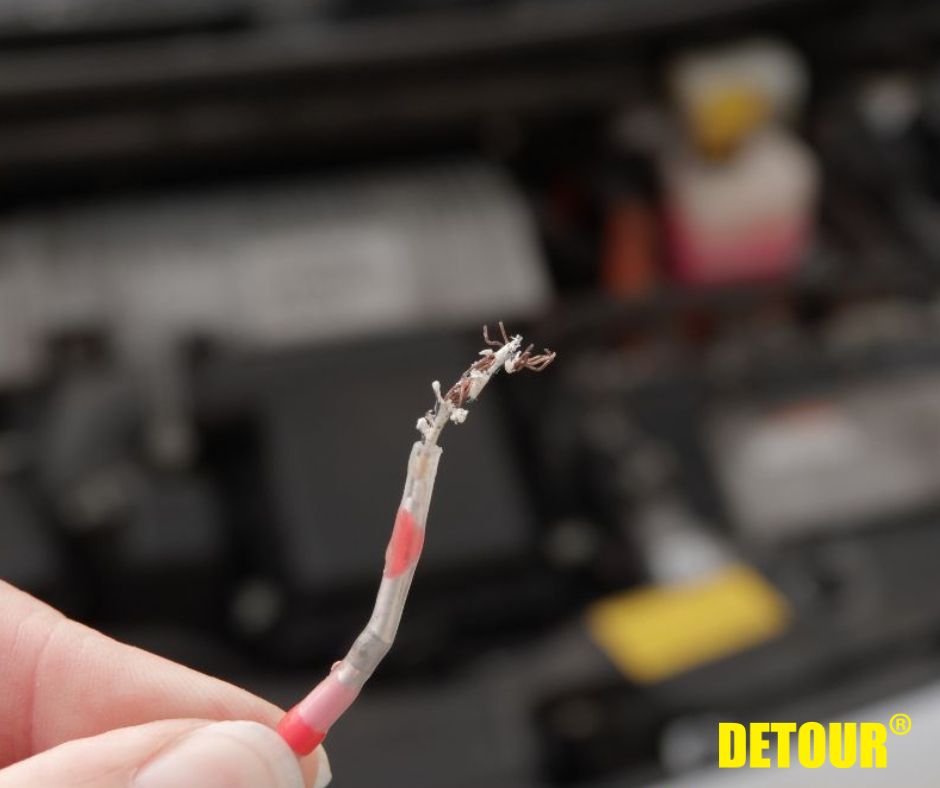
Why Rats Chew Car Wires
To permanently stop rats from chewing car wires, you must understand what draws them to your engine compartment:
- Soy-Based Wire Insulation: Auto manufacturers transitioned from petroleum-based wiring sheaths to eco-friendly, soy-based coatings. To a rat or mouse, this organic wiring material smells and tastes like food.
- Continuous Teeth Growth: A rat’s incisors grow continually throughout its lifetime. To prevent their teeth from growing dangerously long, rodents must constantly chew on hard materials, including tough plastic wiring harnesses and rubber hoses.
- Warmth and Shelter: Engine compartments offer shelter from predators, wind, and rain, while retaining heat long after you park your vehicle.
- Hidden Nesting Access: Deep engine bays feature dozens of tight corners and ledges that allow rodents to construct secure nests completely unseen.
How to Stop Rats From Chewing Car Wires: 3 Essential Steps
Eliminating automotive rodent damage requires a proactive, multi-layered strategy. Follow these three steps to secure your vehicle’s engine bay.
Step 1: Clean and Deodorize the Engine Bay
Before applying any repellent, thoroughly clean your engine bay to remove rodent scent markers, droppings, and nesting debris. Rats use pheromone trails to navigate back to familiar nesting spots. Disconnecting your battery and using an engine degreaser cleans away grease while erasing these chemical cues. Ensure electronic components are dry before proceeding.
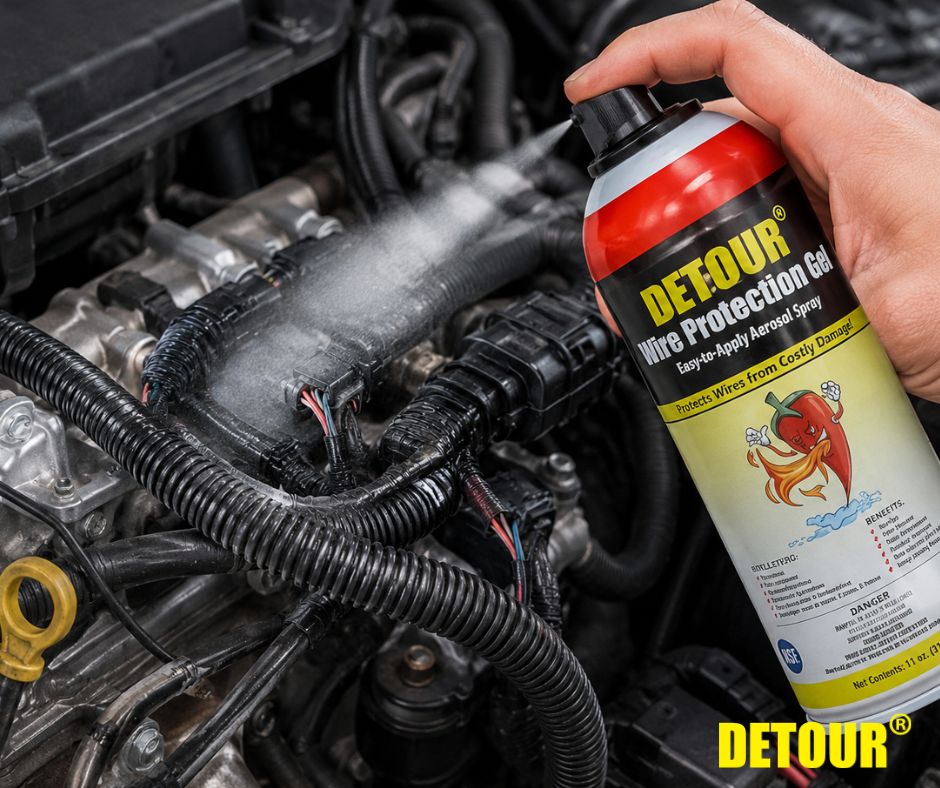
Step 2: Apply DETOUR® Wire Protection Gel or DETOUR Rat Repellent Gels
Traditional snap traps and poison baits fail inside vehicle engine bays because they do not prevent initial wire gnawing. Chemical sprays off-gas harsh fumes through your vehicle’s HVAC system. The ultimate automotive solution is DETOUR® Wire Protection Gel, a specialized aerosol contact repellent powered by pharmaceutical-grade organic capsaicin.
When applied directly onto engine wiring harnesses, battery cables, and vacuum lines, DETOUR® Wire Protection Gel leaves a clear, sticky barrier that does not melt under extreme engine heat or freeze in cold climates. When a rodent attempts to touch or bite a treated wire, the capsaicin triggers a powerful sensory heat reaction on its paws and mouth. This immediate contact reaction creates learned behavioral avoidance, forcing the rat to leave your engine bay without harming the animal or releasing toxic chemical vapors into your cabin.
Step 3: Track and Seal Entry Points
If your vehicle stays parked inside a garage or carport, rodents are likely entering from adjacent walls or structural gaps. Utilize the DETOUR® RatTrax® Tracking Tunnel to identify exact rodent travel paths around your vehicle. This UV tracking system highlights invisible footprints, allowing you to seal entry points along garage walls and structural gaps using heavy-duty sealant or DETOUR® Squeeze Tube Gel underneath cars or in engine bays to help deter rodents.
Automotive Rodent Defense Methods Compared
| Repellent Method | Effective Duration | Engine Safe? | Non-Toxic? | Stops First Bite? |
| DETOUR® Wire Protection Gel | 3-6 Months | Yes (Heat Resistant) | Yes (NSF-Certified) | Yes (Contact Barrier) |
| Rodent Tape (Capsaicin Tape) | Moderate | Yes | Yes | Partial |
| Peppermint / Essential Oils | 2–5 Days | Unstable (Evaporates) | Yes | No |
| Ultrasonic Sound Emitters | Low (Habituation) | Yes | Yes | No |
Protect Your Vehicle's Wiring Today
Chewed car wires are more than a minor headache—they represent thousands of dollars in mechanical repairs and dangerous electrical hazards. By understanding rodent behavior, cleaning scent markers, and applying targeted bio-repellent protection, you can safeguard your vehicle year-round.
Do not wait until a warning light appears on your dashboard. Protect your wiring harnesses, sensor lines, and battery cables with DETOUR® Wire Protection Gel. Explore our full line of non-toxic rodent repellents and keep your vehicle protected for good.

Frequently Asked Questions About Rats Chewing Car Wires
Q: Why do rats chew car wires?
A: Rats chew car wires because modern auto wiring insulation is often made from soy-based organic materials that attract rodents. Additionally, rats must continuously gnaw on tough materials to trim down their fast-growing incisor teeth, and engine bays provide warm, dark shelter.
Q: Is DETOUR® Wire Protection Gel safe for high-heat engine bays?
A: Yes. DETOUR® Wire Protection Gel features an all-weather formula that retains its viscosity and sticky consistency without melting or evaporating under high engine heat or freezing in extreme winter temperatures.
Q: Will peppermint oil or home remedies stop rats from chewing car wires?
A: Home remedies like peppermint oil or mothballs evaporate rapidly when subjected to engine heat and airflow, offering only temporary deterrence (often lasting less than a few days). A contact bio-repellent like DETOUR® Wire Protection Gel delivers long-lasting protection for up to 12 months.
Q: How long does DETOUR® Wire Protection Gel last after application?
A: When applied directly to non-porous surfaces like automotive wiring, battery cables, and hoses, DETOUR® Wire Protection Gel stays active and effective for up to 3-6 months of outdoor defense and 6-12 months indoors.
Q: Why do rats chew car wires?
A: Rats chew car wires because modern auto wiring insulation is often made from soy-based organic materials that attract rodents. Additionally, rats must continuously gnaw on tough materials to trim down their fast-growing incisor teeth, and engine bays provide warm, dark shelter.
Q: Is DETOUR® Wire Protection Gel safe for high-heat engine bays?
A: Yes. DETOUR® Wire Protection Gel features an all-weather formula that retains its viscosity and sticky consistency without melting or evaporating under high engine heat or freezing in extreme winter temperatures.
Q: Will peppermint oil or home remedies stop rats from chewing car wires?
A: Home remedies like peppermint oil or mothballs evaporate rapidly when subjected to engine heat and airflow, offering only temporary deterrence (often lasting less than a few days). A contact bio-repellent like DETOUR® Wire Protection Gel delivers long-lasting protection for up to 12 months.
Q: How long does DETOUR® Wire Protection Gel last after application?
A: When applied directly to non-porous surfaces like automotive wiring, battery cables, and hoses, DETOUR® Wire Protection Gel stays active and effective for up to 3-6 months of outdoor defense and 6-12 months indoors.