
Why Do Rats Chew on Wires? Causes & How to Stop Them
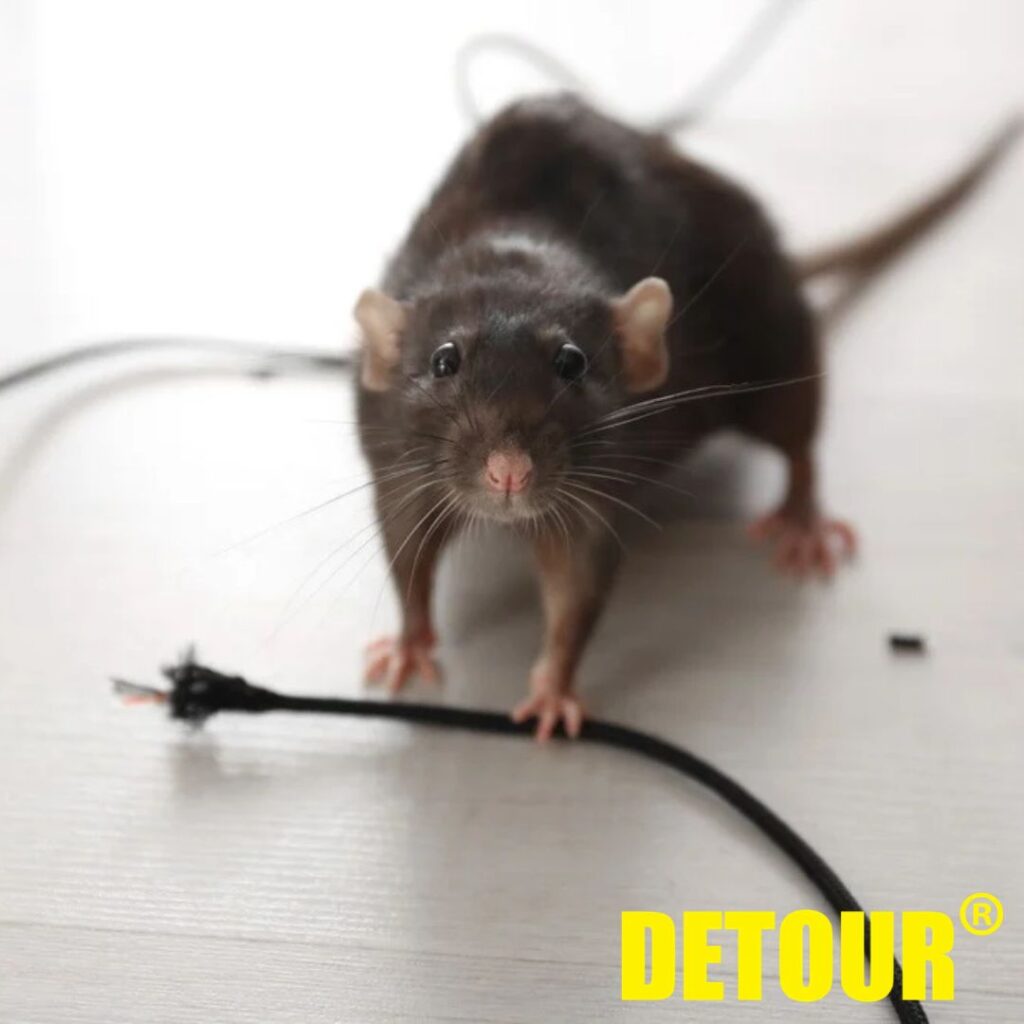
Discovering chewed wiring in your home or vehicle is more than an inconvenience, it is a serious safety and financial hazard. So why do rats chew on wires? Rats chew on wires primarily because their front teeth (incisors) never stop growing. To keep their teeth worn down and sharp, rodents continuously gnaw on tough materials ,and exposed electrical wires are conveniently located along their hidden travel routes. Understanding this instinctual behavior is key to preventing severe rat wire damage. Here is why rodents target electrical systems, the danger signs to watch for, and how to stop them effectively.
Why Do Rats Chew Electrical Wires?
Rodents do not bite into electrical lines for food. Instead, rats chewing electrical wires is driven by instincts and environmental factors:
- Teeth Maintenance: A rat’s incisors grow up to five inches per year. Gnawing on hard objects like plastic insulation and copper wiring keeps their teeth from overgrowing and becoming unusable.
- Exploratory Behavior: Rats use their mouth to explore surroundings, clear physical obstacles, and harvest material for nests.
- Convenient Travel Paths: Wiring runs through dark, quiet wall voids, attics, and subfloors which are the exact secluded highways rats use to move around.
- Soy-Based Insulation: Modern wire coatings often use soy-based plant materials, which attract foraging rodents looking for organic substances.
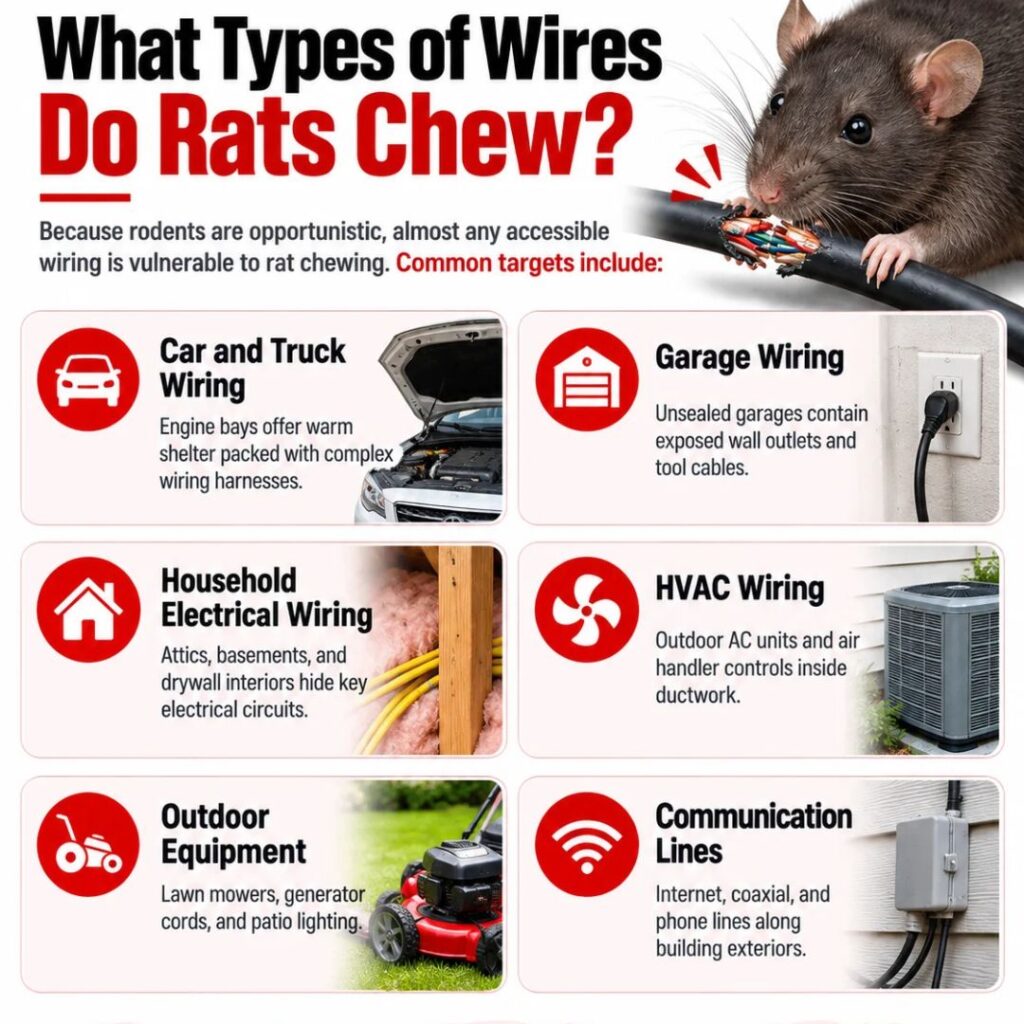
What Types of Wires Do Rats Chew?
Because rodents are opportunistic, almost any accessible wiring is vulnerable to rats chewing wires. Common targets include:
- Car and Truck Wiring: Engine bays offer warm shelter packed with complex wiring harnesses.
- Garage Wiring: Unsealed garages contain exposed wall outlets and tool cables.
- Household Electrical Wiring: Attics, basements, and drywall interiors hide key electrical circuits.
- HVAC Wiring: Outdoor AC units and air handler controls inside ductwork.
- Outdoor Equipment: Lawn mowers, generator cords, and patio lighting.
- Communication Lines: Internet, coaxial, and phone lines along building exteriors.
What Happens When a Rat Chews Through a Wire?
When a rat strips away protective plastic insulation, the consequences escalate quickly:
- Short Circuits & Electrical Failures: Bare copper wires touching metal surfaces break circuits, blowing fuses and shutting down appliances.
- Fire Hazards: Arcing electricity from damaged insulation can ignite nearby wood, dust, or attic insulation, making rodent damage a primary cause of unexplained house fires.
- Vehicle Disruptions: Damaged car sensor wires trigger check-engine lights, battery drains, and complete starting failures.
- Expensive Repairs: Rewiring home circuits or replacing full vehicle wiring harnesses often costs thousands of dollars.
Signs Rats May Be Chewing Your Wires
Catching rodent activity early helps prevent catastrophic electrical damage. Watch for these warning signs:
- Visible Gnaw Marks: Fine, parallel tooth grooves on rubber coatings, plastic conduit, or power cords.
- Flickering Lights & Outlets: Unexplained electrical glitches, tripped circuit breakers, or failing appliances.
- Droppings and Nesting: Small, dark droppings near wire runs, accompanied by shredded paper or insulation.
- Dashboard Warning Lights: Sudden check-engine lights or dead vehicle batteries without a clear mechanical cause.
- Scratching Noises: Rustling or squeaking sounds behind walls, above ceilings, or inside vehicle dashboards at night.
How to Stop Rats From Chewing Wires
Learning how to stop rats from chewing wires requires a proactive, multi-layered approach. While trapping removes existing pests, you must safeguard vulnerable wiring from future attacks.
Applying a specialized rat repellent for wires creates a long-lasting protective barrier. Utilizing an advanced formula like DETOUR® Wire Protection Gel offers an effective layer of defense. Formulated with pure capsaicin in a non-toxic gel, DETOUR® can be applied directly along conduit, engine wiring harnesses, and sensitive structural wiring. The dielectrically stable gel serves to protect wiring from oxidation, stress and cracking, alongside physical damages. The tactile deterrent bothers the pest’s senses without damaging electrical components, teaching rodents to avoid treated areas completely.
How to Protect Car Wires From Rats
Vehicles are especially vulnerable because engine bays are warm and packed with wire coatings. To protect car wires from rats, follow these practical steps:
- Apply Repellents: Spray DETOUR® Wire Protection Gel onto non-moving engine components and wiring harnesses.
- Park Strategically: Avoid parking over tall grass, leaf piles, or near trash bins.
- Keep the Hood Open: In a secure garage, popping the hood introduces light, making the space less appealing for nesting.
- Drive Regularly: Vehicles parked for long periods are prime targets for nesting rodents.
To learn more about securing storage spaces, read our guide on How to Keep Rats Out of Your Garage: 7 Proven Prevention Tips.
Rat Prevention Works Best as a Complete Strategy
Effective rodent wire protection requires stopping pests before they reach your electrical setup:
- Seal Entry Points: Block gaps larger than a quarter-inch with steel wool, sealant, and DETOUR® Rat Repellent Gel over it.
- Eliminate Attractants: Store food in airtight containers indoors, repair leaking spigots, and move trash bins away from parked vehicles and housing.
- Clear Clutter: Remove wood or brush piles near your foundation or parking area.
- Protect Vulnerable Wiring: Treat exposed cables with DETOUR® Wire Protection Gel.
Curious whether non-lethal barriers hold up over time? Read our analysis on Do Rat Repellents Actually Work? to build a long-term defense plan.
Protect Your Wiring With DETOUR®
Don’t wait for a costly electrical failure or vehicle breakdown to act. Combining structural exclusion with targeted active repellents keeps your home and vehicle safe year-round. Ready to shield your electrical systems from gnaw damage? Shop DETOUR® Aerosol Wire Protection Gel today to create a durable, proven barrier that stops rats in their tracks.

FAQs About Rats Chewing on Wires
Why do rats chew on wires in cars?
Car engine bays offer warm, dark shelter away from predators. Modern vehicles also frequently use soy-based wire insulation, which smells organic to rodents. Combined with their constant biological need to file down fast-growing incisors, rats view engine bays as ideal places to nest and gnaw.
Can rats cause a house fire by chewing wires?
Yes, rats chewing electrical wires pose a severe fire hazard. Stripping away plastic insulation leaves bare copper conductors exposed. Arcing electricity can easily ignite nearby flammable materials like dry wood, wall insulation, or paper nesting debris, leading to dangerous and unexpected house fires.
What is the best rat repellent for wires?
The best rat repellent for wires uses tactile or scent-based deterrents that discourage gnawing without damaging electrical systems. Dedicated bio-repellent formulations, such as DETOUR® Aerosol Wire Protection Gel, adhere to wire coatings and create an uncomfortable sensory barrier that trains rodents to stay away.
How do I know if rats chewing wires are in my home?
Common signs include unexplained electrical glitches like flickering lights, blown fuses, or failing appliances. You may also notice small gnaw marks on exposed cables, rodent droppings near electrical panels, or scratching and scurrying sounds behind walls and ceilings at night.
Will tape or wire mesh stop rats from chewing wires?
Standard electrical tape will not stop rats because they can easily chew through it. Metal mesh or conduit offers physical protection, but applying a bio-based wire repellent gel directly to wiring harnesses provides faster, more versatile coverage in tight, hard-to-reach vehicle and household areas.