
How Can Pest Professionals Identify Rat and Mouse Travel Routes?
Pest professionals identify rat and mouse travel routes in three steps: they inspect for signs such as droppings, rub marks, and gnaw marks, place monitoring devices where those signs cluster, and use tracking tools to see where rodents are moving now. No single sign proves a route is active, so confirm current movement before deciding where exclusion and control belong.
What Signs Suggest a Rat or Mouse Travel Route?
Droppings, gnaw marks, rub marks, tracks, and nesting material all suggest a travel route. Rats and mice reuse protected paths, so these signs often line up along walls, pipes, and beams.
- Droppings: Clusters along walls or near food often mark a path.
- Gnaw marks: Chewed wood, wiring, or teeth marks at stopping or entry points.
- Rub marks: Dark smudges form where oily fur (sebum) brushes the same surface again and again.
- Tracks: Footprints and tail drag marks show up in dust or soft soil.
- Nesting material: Shredded paper, insulation, or fabric from furniture points to nearby shelter.
Suspected Activity vs. Confirmed Current Activity
A sign shows that rodents were there at some point, not that they use the route today. Old droppings and faded rub marks may be left from a past infestation. A simple test is to clean up droppings in a suspect area and check whether new ones appear by the next visit. Until then, treat every sign as suspected activity.
Where Should Pest Professionals Inspect First?
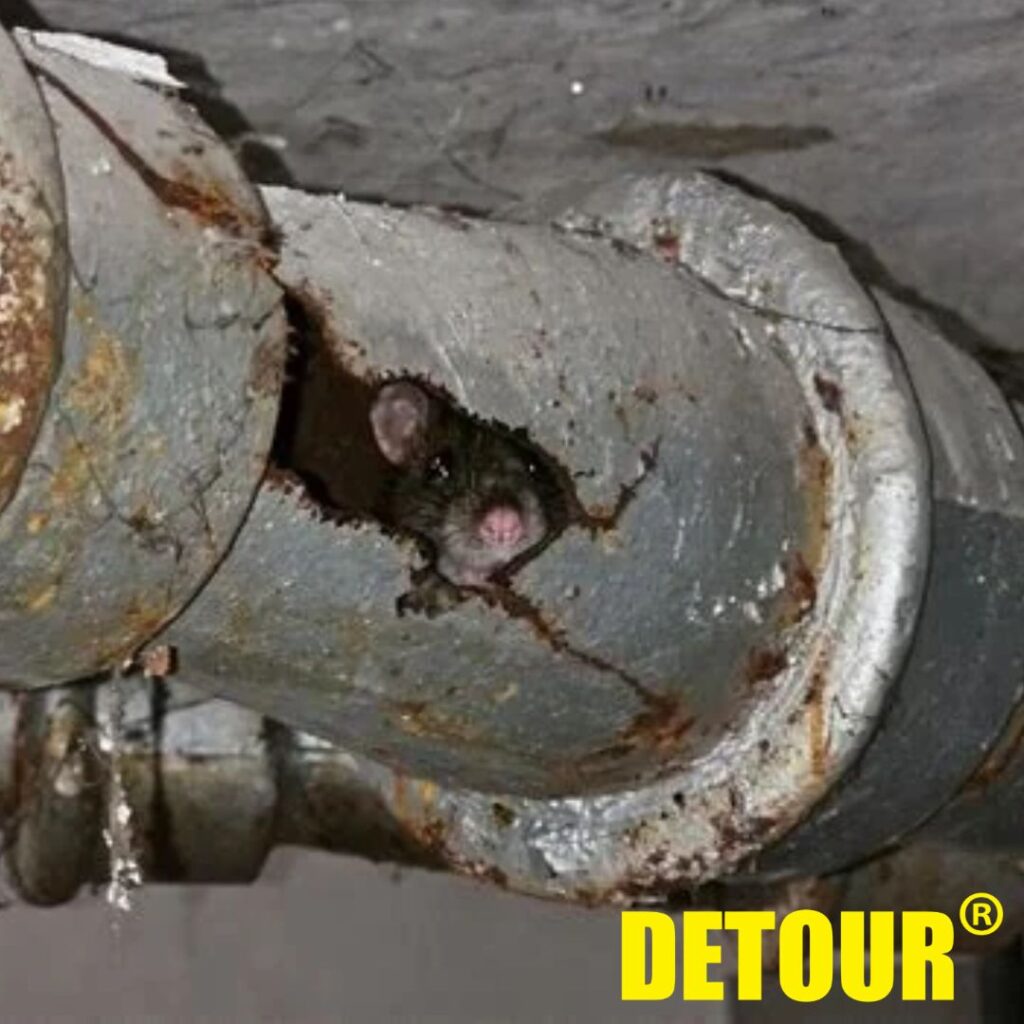
Start where rodents feel protected. Rats and mice prefer edges to open floors, so check:
- Wall/floor junctions and baseboards
- Gaps around pipes, conduits, cables, and vents
- Storage areas, pallets, and shelving
- Behind and under appliances and equipment
- Quiet closets, voids, and rarely used rooms
DETOUR®’s application guides add two field checks. Inspect rooflines from the ground first, because active entries often show grease-stained rub marks. In commercial buildings, walk the perimeter at dusk with interior lights off; light leaking around closed doors reveals gaps.
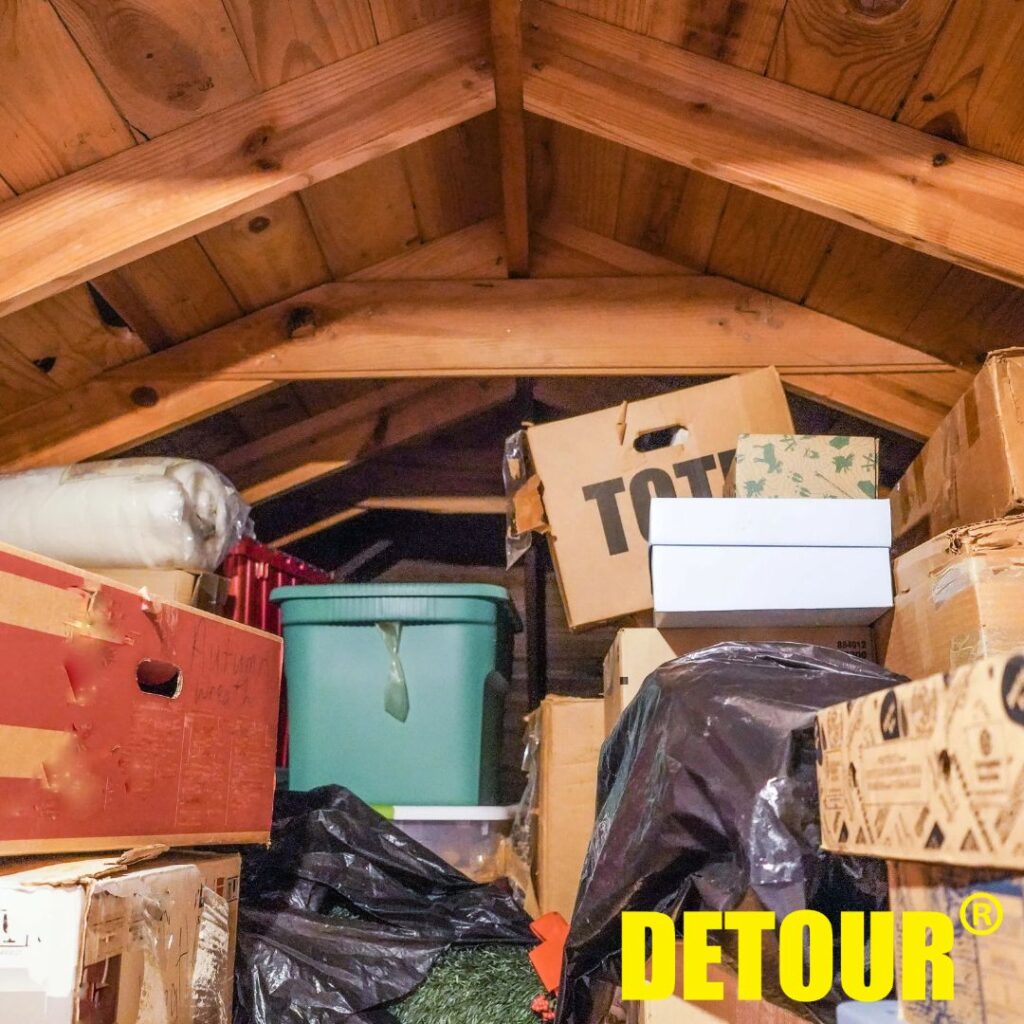
When to Inspect Above Floor Level
If you find droppings on shelves or smudges on beams, inspect elevated areas too. University of California IPM notes that roof rats are agile climbers often seen running along utility lines and fence tops at night, while Norway rats indoors tend to stay in basements or on the ground floor.
How Can Monitoring and Tracking Help Confirm Activity?
Monitoring and tracking turn suspected routes into confirmed ones, so place devices where inspection signs cluster.
Tracking tunnels with UV powder reveal hidden movement: rodents pick up the powder, and a UV light later shows glowing footprints and rubmarks leading toward entry points and nests.
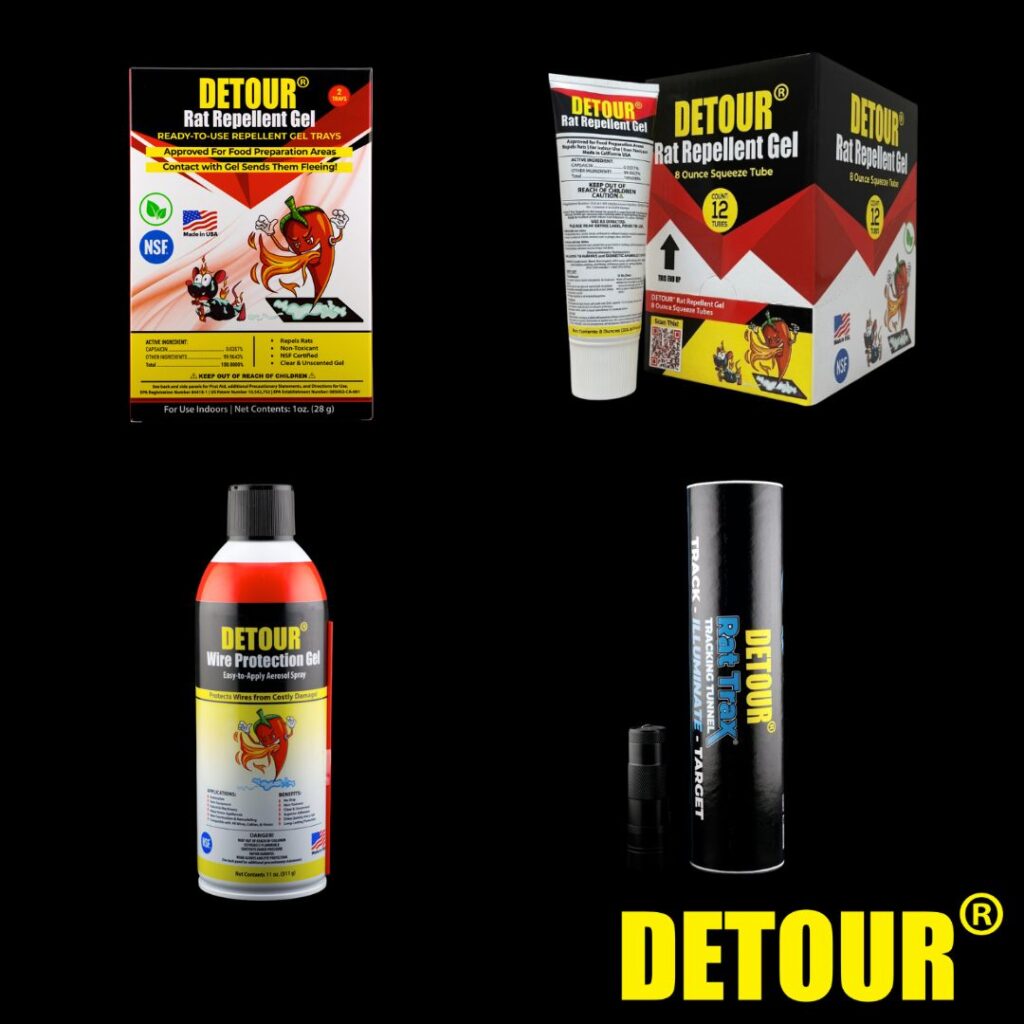
The RatTrax® Tracking Tunnel is built for this job. The kit includes a tracking tunnel, food-safe UV tracking powder, and a blacklight UV flashlight. DETOUR®calls for leaving it along a suspected runway for 24–48 hours, then sweeping the area with the UV light. Running it before and after treatment shows whether traffic has stopped.
How Should Professionals Document Their Findings?
- Map droppings, rub marks, gnawing, and UV trails on one floor plan.
- Photograph each finding with a scale reference.
- Record the inspection date, how fresh each sign looked, and where devices were placed.
Recheck the same locations on follow-up visits to see whether activity is rising, falling, or moving.
How Can Travel Route Findings Guide an IPM Plan?
Confirmed routes show where each part of an Integrated Pest Management (IPM) plan will do the most good:
- Exclusion: Seal the entry points the routes lead to.
- Sanitation: Remove the food, water, and clutter along the path.
- Monitoring: Keep devices on confirmed routes to measure progress.
- Control measures: Place traps or other tools where activity is confirmed.
DETOUR’s Planet Hollywood Las Vegas case study shows how DETOUR® Rat Repellent Gel fits into IPM. Booths were pulled to expose runways, and DETOUR® Rat Repellent Gel went wherever droppings, urine trails, rub marks, and entry points were found across seven kitchen venues. The techncian reported zero rat sightings two-plus months after application.
A capsaicin-based rat and mouse repellent can support the plan; DETOUR® describes its gel as a directional and behaviorial modifying barrier that can help channel rodents toward traps.
Final Thoughts: How to Identify Rat and Mouse Travel Routes With Confidence
Route work depends on evidence, not guesswork: inspect for signs, confirm movement with tracking, and document every visit.
Want to see exactly where rodents are traveling? Explore the RatTrax® Tracking Tunnel in the DETOUR® product line and add UV tracking to your next inspection.

FAQs About Identifying Rat and Mouse Travel Routes
What are the signs of an active rat or mouse route?
New droppings after a cleanup, fresh gnawing, disturbed dust, and recent tracks suggest an active route. Confirm it with monitoring or tracking.
Do rats and mice travel above floor level?
Yes. Rodents use beams, pipes, rafters, and utility lines, and roof rats are strong climbers.
What is the difference between monitoring and tracking?
Monitoring checks whether rodents are present in an area over time. Tracking, such as UV powder in a tracking tunnel, shows the actual paths they take.
How do you interpret UV tracking marks?
Dense, repeated trails along an edge suggest a regular route; scattered prints may reflect a single visit.
When should you reinspect a rodent travel route?
DETOUR’s directions call for checking a RatTrax® tunnel after 24–48 hours. After treatment, recheck the same spots on each follow-up visit.