Automotive & Mobile Equipment
WHY RODENTS TARGET VEHICLES
A vehicle offers a rodent everything it wants: an enclosed engine bay that holds warmth for hours after shutdown, insulation and upholstery to nest in, and dense cover from predators. Then there’s the wiring itself — much of today’s harness insulation is made with soy and other plant-based materials that rodents will actively gnaw.
The bill is brutal and badly timed. A single chewed harness can mean a five-figure repair once diagnostic labor is included, and the failure almost always surfaces at the worst moment — the morning you need the truck, the first start of the season. DETOUR® takes two coordinated approaches: a protective barrier over the wiring rodents target, and repellent gel on the structures and access points around where the vehicle sits.
Wiring Harnesses & Engine Bays
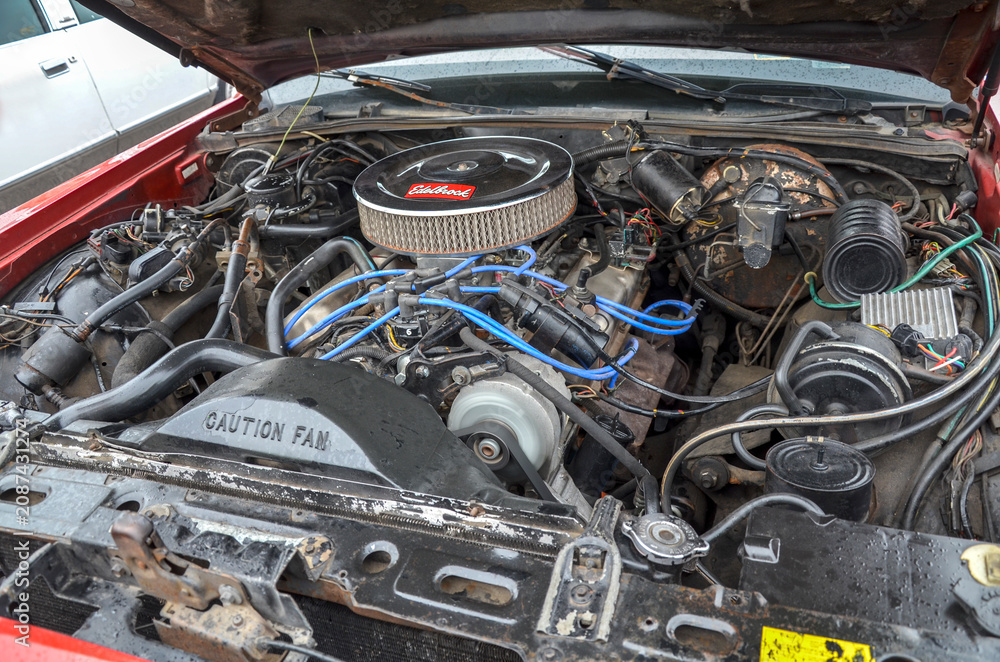
The engine bay is the target. It stays warm long after the engine’s off, it’s enclosed and hidden, and it’s laced with wiring. Rodents nest against the block and gnaw harness insulation, connector boots, and cable looms while they’re in there.
Bio-based insulation on modern vehicles makes it worse than it used to be — the coating itself is now an attractant. Damage stays hidden until a sensor throws a code or the vehicle won’t start, and the repair runs high once the harness has to come out.
DETOUR® Wire Protection Gel (11 oz. aerosol) coats harnesses, looms, and connector boots with a durable film that forms a physical barrier over the surfaces rodents chew. Spray directly onto wiring bundles and the insulation around them.
The aerosol format reaches the recessed, awkward geometry of an engine bay — the tight runs behind the block and along the firewall that a tube or brush can’t service.
For the surrounding structure — where the vehicle is parked, garage and shop access points — repellent gel discourages rodents from approaching in the first place.
Stored & Seasonal Vehicles
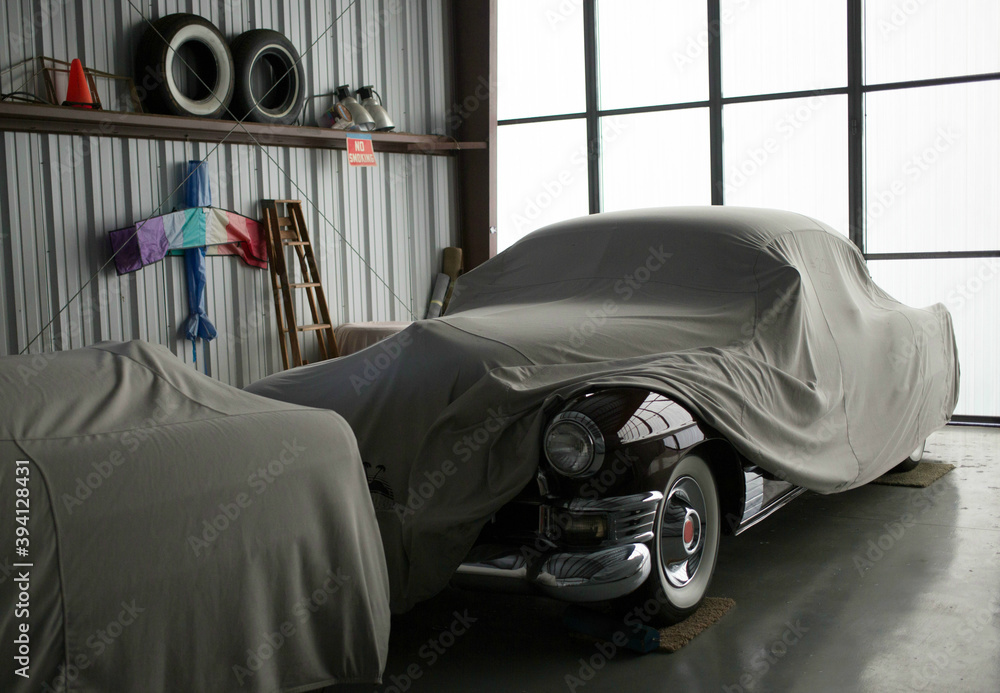
Classic cars, RVs, convertibles, and motorcycles parked for a season are undisturbed shelter for months — exactly the conditions a rodent population needs to move in, nest, and chew unnoticed.
The owner discovers it in spring: a nest in the air box, droppings through the interior, and wiring damage that turns the first drive of the season into a tow to the shop.
Protect the vehicle at the moment it goes into storage, not when you pull it out. Coat engine-bay wiring and looms with Wire Protection Gel to put a barrier film over the surfaces rodents would target through the layup.
Treat the storage space itself with repellent gel — door thresholds, wall penetrations, and the perimeter where the vehicle sits — so rodents are discouraged from the building, not just the vehicle.
Fleet & Commercial Vehicles
Delivery vans, work trucks, and buses sit overnight and over weekends in yards and depots — parked long enough, often enough, for rodents to treat the lot as habitat.
For a fleet, a chewed harness isn’t just a repair bill; it’s a unit out of service and a route uncovered. Downtime is lost revenue, and a rodent problem in the yard hits several vehicles, not one.
Build wiring protection into scheduled fleet maintenance. Coat engine-bay harnesses with Wire Protection Gel on a set interval, treated during the PM cycle vehicles already go through.
Treat the yard and depot structure with repellent gel — building access points, storage areas, and the perimeter — to reduce rodent pressure across the whole lot rather than vehicle by vehicle.

Dealership & Vehicle Storage Lots
Rows of inventory sit for weeks between delivery and sale. To a rodent, a full lot is a subdivision of identical, undisturbed shelters — and the vehicles most likely to be colonized are the ones sitting longest.
The damage surfaces at the worst possible moment: the test drive or the pre-delivery inspection. Now it’s a warranty headache, a delayed sale, and a customer who saw the problem before they signed.
Protect inventory with a lot-wide approach. Coat harnesses on long-dwell units with Wire Protection Gel, prioritizing the back-row vehicles that sit longest.
Treat the lot’s structures — perimeter fencing bases, storage and service buildings, ground-level utility access — with repellent gel to lower the rodent population feeding into the lot from surrounding cover.

Cabs, Interiors & HVAC
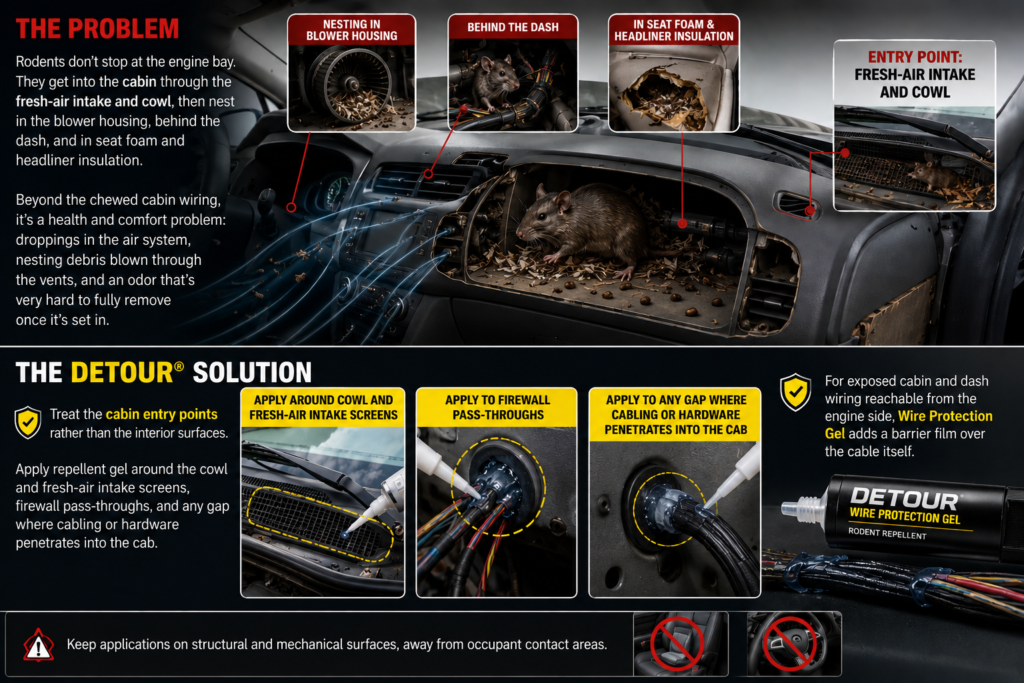
Rodents don’t stop at the engine bay. They get into the cabin through the fresh-air intake and cowl, then nest in the blower housing, behind the dash, and in seat foam and headliner insulation.
Beyond the chewed cabin wiring, it’s a health and comfort problem: droppings in the air system, nesting debris blown through the vents, and an odor that’s very hard to fully remove once it’s set in.
Treat the cabin entry points rather than the interior surfaces. Apply repellent gel around the cowl and fresh-air intake screens, firewall pass-throughs, and any gap where cabling or hardware penetrates into the cab.
For exposed cabin and dash wiring reachable from the engine side, Wire Protection Gel adds a barrier film over the cable itself. Keep applications on structural and mechanical surfaces, away from occupant contact areas.
Agricultural & Heavy Equipment
Combines, tractors, skid steers, and generators spend long off-seasons parked in sheds and open barns. A machine that sits eight months is a heated, sheltered, predator-free structure the moment it’s last run — and rodents move in for the layup.
Modern equipment carries the same bio-based wiring as cars, plus far more of it. A severed harness on a late-model combine is a major repair, and it surfaces at first start-up in the busiest week of the season.
Coat wiring runs, looms, and cab harnesses with Wire Protection Gel when the machine goes into storage — a barrier film over the extensive cabling these units carry.
Treat the equipment’s access points and the storage structure with repellent gel: cab door seals, floor-pan gaps, intake screens, and the shed’s own entry points and perimeter.

Marine & Powersports
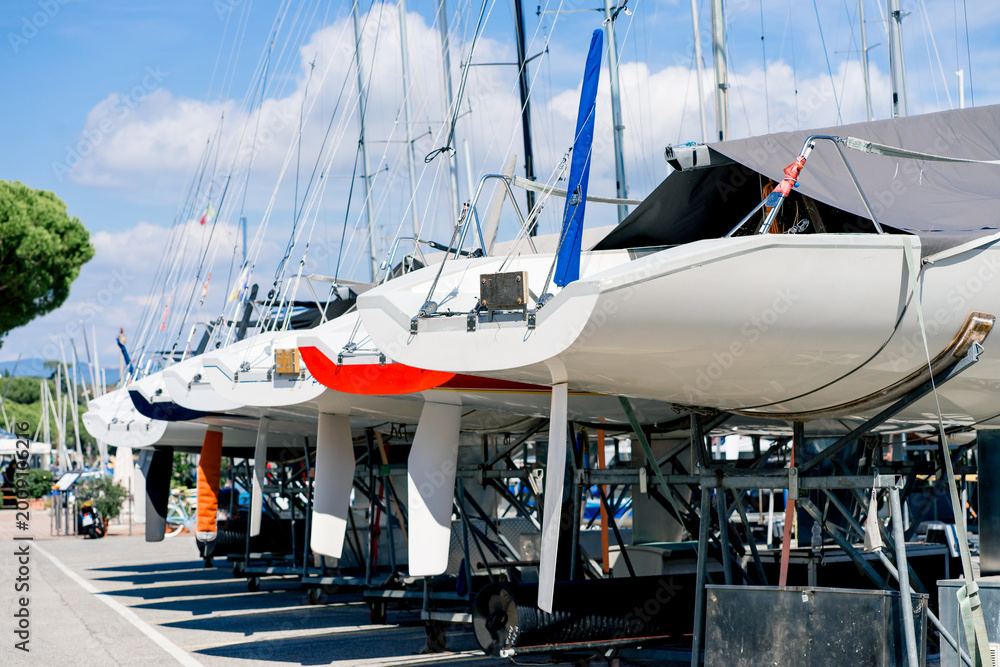
Boats, jet skis, ATVs, snowmobiles, and side-by-sides spend much of the year in storage — shrink-wrapped, tarped, or shedded — and every one of them is a warm, enclosed nesting site with wiring to chew.
Marine and powersports layups are especially vulnerable because they’re long, sealed, and unchecked. Owners open them up at the start of the season to find nests in the hull, engine, or airbox and wiring that needs replacing before the first ride.
Before wrapping or covering for the off-season, coat engine and accessory wiring with Wire Protection Gel — a barrier film over the harnesses and looms in the bilge, engine bay, or under the seat.
Treat the access points where rodents get aboard — trailer tongue and frame contact points, hull drains and vents, and the storage structure around the unit — with repellent gel before the cover goes on.